

scale(76.8)'/%3e%3cuse%20xlink:href='%23cn-a'%20width='30'%20height='20'%20transform='rotate(-121%20142.6%20-47)scale(25.5827)'/%3e%3cuse%20xlink:href='%23cn-a'%20width='30'%20height='20'%20transform='rotate(-98.1%20198%20-82)scale(25.6)'/%3e%3cuse%20xlink:href='%23cn-a'%20width='30'%20height='20'%20transform='rotate(-74%20272.4%20-114)scale(25.6137)'/%3e%3cuse%20xlink:href='%23cn-a'%20width='30'%20height='20'%20transform='matrix(16%20-19.968%2019.968%2016%20256%20230.4)'/%3e%3c/svg%3e)
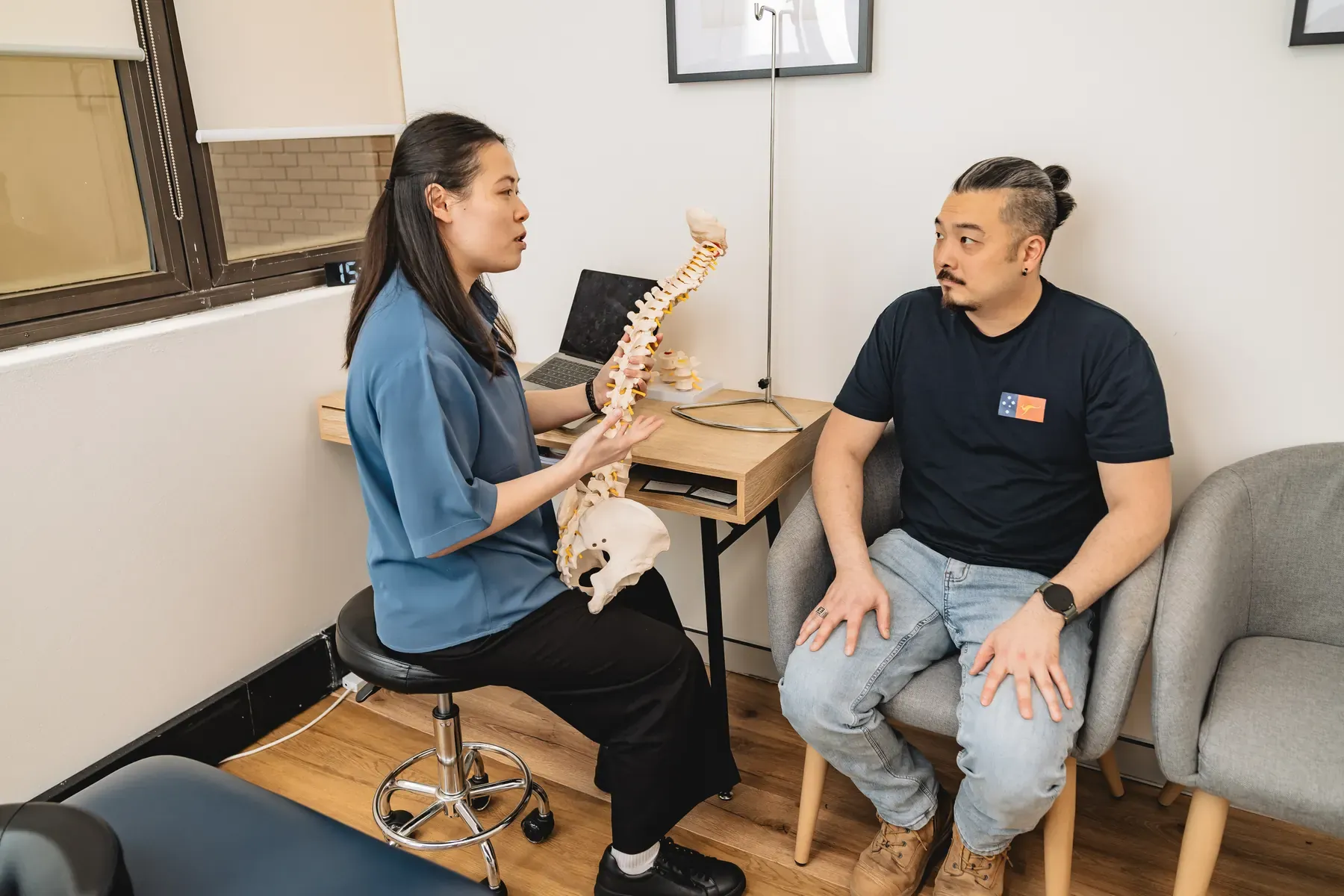
Returning to the gym after back or neck pain starts with deciding what activity is appropriate now, rather than testing whether you can match your old workout. For uncomplicated low-back pain, staying active is generally encouraged; that does not mean immediately resuming heavy lifting.1 Ask about a starting point, how to progress and which changes need review. A new injury or warning signs need medical assessment first.
If you train in Chatswood or fit exercise around a desk-based workday, these questions can help you prepare for a conversation with the clinician managing your care. They are not a workout prescription or clearance to train.
Check whether medical care comes first
Call 000 for back pain with new loss of feeling or movement in your limbs, or problems controlling your bladder or bowel. Sudden severe back pain, significant trauma or an inability to walk needs emergency care.2
For sudden severe neck pain, or neck pain after a traumatic accident, call 000. Neck pain with chest pain, breathlessness or sweating also needs an ambulance.3
Seek urgent medical care for neck pain accompanied by fever, new numbness or weakness, dizziness, balance problems or confusion.3 Back pain with fever or feeling unwell also needs emergency assessment.2 This is not a complete warning-sign list. New or worsening symptoms should not be treated as a normal training response.
1. What have we assessed, and what remains uncertain?
Before choosing exercises, ask: “Is there anything that changes what I can safely do?” Mention any fall or collision, pain travelling into an arm or leg, previous surgery and advice from another treating clinician.
Most people with back pain do not need scans to make a diagnosis; imaging is also unnecessary for most neck-pain presentations.23 If a scan is suggested, ask what question it would answer and how the result would affect your plan.
You do not need a precise tissue label to have a useful discussion about activity. You do need clarity about any restrictions, referral needs and what to do if symptoms change.
2. What is a sensible starting point for me?
Tell the clinician what “going back to the gym” means for you. A short exercise-bike session, a group circuit and a heavy barbell session have different demands.
Ask which activities you can continue, which need modification and which should wait. For uncomplicated low-back pain, the Australian clinical care standard supports staying active and an individual plan rather than prolonged bed rest.1 Do not apply that advice automatically to neck pain after an accident or to an injury that has not been assessed.
Bring your usual training log if you have one. Record the movements, weights, repetitions and session length so the discussion starts from your actual routine.
3. Which part of the workout should change first?
“Load” includes more than the weight on a bar. It can also mean repetitions, sets, movement range, speed, session length or how often you train.
Ask which variable to adjust first and what should stay steady while you judge the response. For example, discuss whether to keep a session shorter before adding more sets. This is a conversation prompt, not a recommendation that a particular movement is suitable for everyone.
Avoid borrowing a universal weekly percentage increase from another person’s programme. Your plan should specify the starting point and progression criteria for your circumstances.
4. What response should I record?
A useful training note can include:
- what you did and how much;
- how you felt during and after the session;
- whether sleep or everyday activities changed; and
- any new symptoms or change in where you feel pain.
Ask your clinician which responses are acceptable, which call for modifying activity and which mean you should stop and seek review. There is no pain-score rule in this article that clears you to lift.
For neck pain without an injury or accident, Healthdirect advises gentle natural movement and avoiding activities that cause pain.3 Discuss how that applies to your chosen exercises rather than pushing through a painful movement.
5. What is the plan if symptoms flare?
Agree on what you should do before a flare occurs: which activity to modify, when to contact the clinician and when medical care is needed. A written plan is easier to follow than trying to decide in the middle of a workout.
Record what changed, rather than assuming that one exercise explains everything. Include changes to work, sleep, training frequency and other activity. Do not keep repeating the same session if your ability to manage everyday tasks is deteriorating.
6. When should we review progress?
Ask how progress will be measured. Useful goals to discuss might include completing a modified session, returning to a favourite class or managing normal daily activities more comfortably. Agree on when to review the plan if progress stalls.
A chiropractor, physiotherapist, GP or other treating clinician may have a role depending on the findings. The choice of care should follow your needs, rather than a promise that one treatment will get everyone back to training.
Discussing your return at our Chatswood clinic
Our back pain and neck pain pages provide related information. At our Chatswood clinic, an assessment can consider your concerns and whether chiropractic care may be suitable, with medical review or referral where appropriate.
Read Sports Injuries: Assessment, Recovery and Returning to Activity in Chatswood for the broader injury-management context. You can also read what to expect or book an assessment once urgent concerns have been addressed.
Common questions
Do I have to be completely pain-free before moving again?
For uncomplicated low-back pain, returning to suitable activity does not always require all pain to have gone.1 That is not clearance for heavy training, and it should not be generalised to an unassessed neck injury. Ask what is appropriate for your situation.
Should I stop all exercise and rest in bed?
Prolonged bed rest is discouraged for uncomplicated low-back pain.1 Ask which activities you can keep doing and whether any need temporary modification.
How much weight should I start with?
This article cannot choose a weight or percentage for you. Discuss your previous training, current function and assessed restrictions before deciding on a starting load.
Does feeling better after treatment mean I can resume my usual workout?
A change in how you feel is worth reporting, but it does not replace a discussion about the demands of your workout. Ask how to judge readiness and when to review the plan.
What this guide cannot tell you
This guide cannot diagnose the cause of pain, clear you for exercise or prescribe sets, repetitions, weights or a return date. Persistent, worsening or unfamiliar symptoms need review. Emergency warning signs take priority over a routine booking.
Sources
Footnotes
-
Australian Commission on Safety and Quality in Health Care. Low Back Pain Clinical Care Standard, particularly quality statement 5. Accessed 3 October 2026. This standard concerns low-back pain; it is not a neck-injury guideline. ↩ ↩2 ↩3 ↩4
-
Healthdirect Australia. Back pain. Accessed 3 October 2026. ↩ ↩2 ↩3
-
Healthdirect Australia. Neck pain. Accessed 3 October 2026. ↩ ↩2 ↩3 ↩4